Friday, September 4, 2009

Share the Love (of reading)


Rebecca over at Scratch That pointed out this bit of fun.

* Grab the book nearest to you.
* Turn to page 56. * Find the fifth sentence.
* Post the sentence with instructions on your blog.
* Post link to Storytime with Tonya and Friends.
* Don't dig for your favorite book, the coolest, the most intellectual. Use the closest.

Or, if you prefer, just place the sentence in comments here.

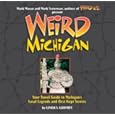
Here's my contribution (from my son's copy of Weird Michigan) : "Besides inventing and perfecting illusions and escape techniques, Houdini was very interested in spiritualism."

Tuesday, September 1, 2009

Another Review of "The Dragons of Hazlett"

I'm pleased to announce that another review of my novel, The Dragons of Hazlett, has been posted at Stella Matutina's blog.

Friday, August 28, 2009

Deep Purple


Deep Purple
Originally uploaded by nerdvin
There are so many lovely words in the English language, aren't there? Quixotic, erudite, tenebrous... All those lovely adverbs and adjectives just waiting to be used by the likes of us. Like shopping in an exquisite candy store, sometimes it's difficult to reign ourselves in. (Besides, unlike the candy store, words are free!)

But we have to. Most times, restraint and not overabundance is what makes a writer good. Consider this:

"Her face had the fragrance of a gibbous moon. The scent of fresh snow. Her eyes were dark birds in fresh snow. They were the birds' shadows, they were mirrors; they were the legends on old charts. They were antique armor and the tears of dragons. Her brows were a raptor's sharp, anxious wings. They were a pair of scythes. Her ears were a puzzle carved in ivory. Her teeth were her only bracelet; she carried them within the red velvet purse of her lips. Her tongue was amber. Her tongue was a ferret, an anemone, a fox caught in the teeth of a tiger."

Now, not every author has a style that I appreciate, but this is WAY over the top (and, yes, this is an actual quote from a book published by a major publishing house. I was first alerted to it by a post on Live-Journal.) The above selection is an extreme example, but sometimes it takes an extreme example to make a point.

This kind of writing should be done as a warm up activity only. Or, it can even be helpful to brainstorm in this way. Frequently, I wil freewrite for ten minutes when I'm confronting a passage of description. But after I put those words on paper, I edit my work. Three paragraphs of writing may be condensed down to a single sentence or two.

Grapes, wine, and pansies can all be purple. But never, ever, let your prose get that way!

Wednesday, August 26, 2009

Harry Potter and the Half-Blood Prince - a Movie Review


Once again, my friend and fellow blogger The FilmNut gave me the opportunity to review a movie. So here it is!

Monday, August 10, 2009

Take Time to Edit


Grasshopper
Originally uploaded by forbesimages
If you're like me, the moment you finish writing a story (or a novel, or a poem, or whatever), you want to dash off a thousand queries to a thousand markets in the hope that one will accept it. There's something about typing the words 'The End' at the bottom of the last page that make me want to send that manuscript off pronto!

But when I feel this way, I always remember those immortal words, "Patience, Grasshopper."

Over the years, I've found that the very last thing I should do when I first finish a story is send it out. That's because finishing a work is a lot like finally consummating a passionate, oftentimes rocky, relationship. You've struggled with writing the story, maybe even laid awake at nights thinking about it. The plot has thwarted you. The descriptions have plagued you. The characters have evaded you. But now you're finished. It's a genuine high. (I've been known to literally do a dance in my office after finishing a piece, much in the same way that quarterbacks will dance in the end zone after completing a touchdown.)

This is the time you'll have that post-consummation, dreamy feeling about your story. You won't see its flaws; you'll only be rejoicing that you've finally finished the darn thing. You'll be thinking of seeing your name on the printed page and fan mail and royalties.

What you need (and what your story needs) at this point is a good dose of reality. You need to look at your work - not with those dreamy, lovey-dovey eyes - but with the cold, hard eyes of someone who has woken up the next morning and realized that she's written a book (or a story or whatever).

Once you complete that story - even if you've been editing all along - set it aside. For a week. Better yet, if you can stand it, for a month. Then re-read it carefully. Read it out loud to yourself, in fact. You'll be amazed at what you discover. Those words you thought were all perfectly spelled, that carefully crafted plot, those passages of description... There is nothing like time and distance to make the flaws in your writing stand out (and I am saying this from a lot of personal experience).

When you send your work off to the agent or market of your choice, you want to be 100% confident that your work is the very best it can be. For that, you need to give yourself some time away from your work.

Tuesday, August 4, 2009

Ten Most Wanted

Speaking of queries...

If you think selling short fiction is tough, the process for novel-length work contains its own novel-sized problem.


The snarky yet hilarious
post on Tumblemoose puts query writing into perspective. Cops style.

Monday, August 3, 2009

4,000 to 1


Other imprint's slush pile
Originally uploaded by Katertot
First, something fun.

National Public Radio is hosting another writers' competition. This one has to do with writing titles. In honor (well, kind of) of the late Robert Ludlum, NPR is asking listeners to tweet their attempts at the worst possible title for a spy movie. In order to read the entries, go to Twitter and enter #AbsurdSpyMovies in the 'search' box. Some of my favorites include: The Carradine Complication, The Freudian Fling, and "Live and Let Tie-Dye". I'm also proud of mine: The Gordian Nautilus.

# # # #

Okay, onto today's real topic. Slush.

No one likes to think about slush piles. Not editors, not agents, and certainly not writers. The very idea of a slush pile can make hardened writers tremble and turn gray. Today's blog title, "4,000 to 1" is actually a statistic that was posted on Mike Resnick's recent article Slush. This is the odds of a new writer being accepted by Asimov's magazine. And the picture for today's post? You guessed it - it's a slush pile.

Over the next few posts, I hope to help you improve your slush-pile odds. But let me be clear: I cannot guarantee that you will be accepted!! I am speaking as a somewhat newbie writer myself (though, I will say that I have a dozen or more publishing credits!) Certainly, I suffer from slush and rejections as much as anyone.

But even though there is no magic formula to success, there are concrete things that you, as a writer, can do to help your manuscript the best it can be and - hopefully - make it to the top of the slush pile.

Saturday, August 1, 2009

Sometimes Summer Gets in the Way


It's been so long since I've last written that when I tried to enter the Blogspot site, I was sent to the login page. It's like being asked for your ID at the neighborhood bar. But to be fair, I haven't written in a while.

Sometimes summer just gets in the way.


Well, I'm back with a few new ideas for posts (including some on how to proofread a story and what makes a story work), but for today, I'd like to share a fun bit that I found on
NPR (National Public Radio).

Writing
flash fiction is difficult. It may not seem that way, but it is. The fewer words a story contains, the more difficult it is to tell the story. It's like trying to run a household on a tight budget. There's no room for extras.

Enter NPR's Three-Minute Fiction Writing contest. Last June, National Public Radio asked its listeners to submit stories that could be read in three minutes or less. After slogging through 5,000 submissions, the results are in. You can read the winning entries
here.

Flash fiction has never been something I've been able to write. I guess I'm just too
verbose. But I had a fun time reading these winning entries, and I hope you will too.

It's good to be back!

Friday, July 10, 2009

A Review of "The Dragons of Hazlett"

My novel, The Dragons of Hazlett, has just been reviewed at Bearmountain Books. Needless to say, I'm thrilled!

Monday, July 6, 2009

Publishing with a Small Press

I knew fairly early on after completing my novel that I wanted to publish with a small press. I'd run the gauntlet of submitting to major publishing houses before and, having some idea of the massive slushpiles and phenomenally long response times, didn't feel up to the task this time around. Agents, of course, are another route, but the first agent I queried (a big name in the speculative fiction markets) said that he thought the world in which my book took place was too unbelievable. Worrying that other agents might feel the same way, I began to seriously consider an alternative.

The obvious place to begin looking for a small press was the Internet. The first thing I discovered is that there are a lot of small presses! Some of these I immediately rejected because they weren't very established: their author lists were quite short and their name recognition seemed to stretch only as far as the boundaries of their web page. Others didn't print speculative fiction. When I came across Mundania, however, I found that it met all my criteria. It had a history of publication with many authors, it was well rated on the writing advocate websites I checked, and its authors produce quality, award-winning work. After researching the company, I knew I'd found a place to submit.

Not that submitting to a small press is a sure-fire guarantee that an author will be published. Like the major houses, small houses like Mundania receive a significant amount of queries. And the numbers of submissions keeps increasing. Right now, Mundania estimates that it only accept one query in five-hundred. Anyone assuming that a small press does not have high standards and therefore will publish anything is wrong. When I received an e-mail from the publisher letting me know that my novel had been accepted, I was thrilled. I knew that I'd accomplished something major.

Since then, my experiences have been very positive, and I like that I've been able to cut my publishing teeth with a small press. The editors are very easy to work with and the publishers work hard to keep their writers happy. There is ample opportunity to network with other Mundania authors. I've been able to give input into such things as my cover art and am allowed to ask questions and offer opinions. Perhaps most importantly, there have not been major turnovers in staff and therefore I have not been passed around to people who aren't familiar with my work.

I am finding, however, that there are stigmas against publishing with a small press. Some people seem to think that "small press" and "vanity press" are the same thing. This is not true. Mundania passes the vanity press litmus test with flying colors. That is, they pay me for my work; I do not pay them. And although I was not given an advance, my royalty percentages are the same as those given to authors at larger houses. In fact, Mundania's royalties on e-books are significantly greater than those offered by large publishing houses.

Another difference between larger houses and a small press is exposure. This seems to be a sticking point for some people who think that, because a small press author is expected to promote her books, she is somehow being taken advantage of by the publisher. However, authors in larger houses - especially new authors - are expected to do this as well. Bookstore signings, speaking engagements, public appearances, maintaining an author website and blog are all tools that all authors must to use if they want to promote their books and boost sales.
For writers who are unsure of whether or not to try a small press, I would highly recommend it but with a caveat. Do your research to make sure that the publishers you are interested in are reputable. Check their booklists and publishing records. Definitely read a few of the novels they have published. Finally, realize that you will be responsible for promoting your work. But if you are willing to put in this effort, a small press may be just what you're looking for.

Saturday, June 20, 2009

Make Yourself Invisible

As writers, we are, at times, tempted to show off our skill. We want to write that amazing word picture of the windswept coastline or give a detailed description of our favorite character. We are artists, and words are our medium...

Okay, let's get real. Yes, writers use words to create pictures for their readers, but they also use words to tell stories. Too much description, however, will bog down a story; it may even stop it in its tracks. Personally, I'll take a well-written descriptive sentence over a lumbering paragraph every time. Maybe that makes me a cretin, I don't know. But what I do know is that I'm not alone in this opinion.

Today, the editing blog The Blood-Red Pencil posted a link to an essay written by Elmore Leonard entitled "Easy on the Hooptedoodle". Some of the hints include not opening with a discussion on the weather, not going into too much detail in our character descriptions, and not to use words like 'suddenly'. If you are unfamiliar with Leonard's work, I highly recommend picking up one of his books. His prose is tightly written and full of action yet contains vivid descriptions and interesting characters. The man is a terrific writers and knows what he's talking about in this essay!

Putting your thumbprint squarely on your manuscript is as bad of an idea as putting it in the middle of the pie you just baked. You might appreciate it, but others probably will not.

Friday, June 12, 2009

Life After Agents?

Writer Dean Wesley Smith posted an interesting bit about agents and what they do and don't do for a writer. There's some great history here as well as a not-often heard opinion on agents.

After you've read that, you can pop over to Absolute Write to hear what other authors (including yours truly) think about Smith's post.

Monday, June 8, 2009

Up


My friend the filmnut asked me to blog again for his site. Today's review is Up by Disney/Pixar.

Saturday, June 6, 2009

Plot Progressions

Making readers want to read on, that's the writer's goal. No one wants to have their readers stop halfway through the book or story. Surprise endings are one way to create tension (though not a very good way.) So is dramatic irony. A third method is plot progression.

Plot progressions are a type of dramatic irony in that the audience is clued in to what is coming next. The story starts with a small action, repeats that action on a somewhat larger scale, and then repeats the action again with even greater consequences (and a greater payoff for the reader). Readers are kept on the hook because they can see where this course of action is leading (even if the
protagonist cannot).

There are many, many examples of this kind of plot (in fact, I challenge you to come up with your own examples!), but my favorite comes from
Stephen King's Pet Cemetery. (Warning: spoilers follow!)

Pet Cemetery
centers around the idea that dead bodies buried in a secret Native American burial site will come back to life. Well, 'life' in a reanimated corpse kind of way. The plot begins with the death of a student; a person who is only marginally associated with the protagonist, Dr. Louis Creed. But this action makes Creed begin thinking about death and his own philosophy of the afterlife. Next, Creed's elderly neighbor dies, and the doctor gets a more personal look at the tragedy. A while later, Creed's daughter's cat dies and the doctor, unable to bear his child's sorrow, buries the cat in the enchanted cemetery. The results are disastrous, and he vows to never do it again. But then his son dies...

Looking at this progression, you can see how King builds the tension and intensifies the payoff. Sure, the audience has a pretty good idea of what is going to happen, but they can't wait to read it. Like watching an impending car wreck, you can't tear your eyes away.


Plot progression can be as simple as a fairy tale (which is the basis for such stories as
Goldilocks and the Three Bears and Jack and the Beanstalk) or as complex as a Stephen King novel, but it is a terrific way to keep your readers involved in your story.

Sunday, May 31, 2009

Rules for Writing

I love to poke around on the Absolute Write Water Cooler. Mostly, I hang around the scifi/fantasy genre boards, but lately I've ventured out into the novels section. I'm not sure why I've never run across this before, but today I found some excellent posts by author, James D. MacDonald.

When I read this one, I just knew that I had to post it. So here it is, 'Uncle Jim's Twenty-five Simple Steps to Becoming an Author':


Rules for Writing

There are twenty-five simple steps to becoming a published author.

Here are the steps:

1. Black ink on white paper.

2. Place your name and address in the top left-hand corner of the first page.

3. Place the title and byline, centered, half-way down the first page.

4. Put a running head (your name, the title, and a page number) in the top right hand corner of every page.

5. Your pages should have one-inch margins.

6. Doublespace your text.

7. Use Courier 10 or Courier 12 only.

8. Type on one side of the paper only.

9. Continue until you reach "The End."

10. Rewrite.

11. Rewrite.

12.....21. Revise

22. Obtain the guidelines for a market that accepts material similar to what you have finished.

23. Follow the guidelines scrupulously when you submit your material.

24. While you are waiting for your rejection slip, start again back at step 1 for your next work.

25. When the rejection slip arrives, send the manuscript to the next market on your list, that same day.


Okay, maybe these steps aren't as simple as they sound (but what worthwhile thing ever is?). But this is heck of a good bit of advice.


I, for one, am going to do my best to follow the plan.

Thursday, May 28, 2009

A Writer's Toolbox

Betty Dobson at Apollo's Lyre had a great post yesterday: The Top 10 Things Every Writer Needs. I love her list, but I'd like to add just a couple of items of my own:

1. A baby name book. This sounds strange, but it is an invaluable tool. Most times, writers have the names of their main characters already picked, but there are times when a minor character needs to be named and a baby name book can help with this.


2. A flash drive. Backing up your files is extremely important!
I've blogged on this before. Having a good flash drive will make backups much easier.

3. Index cards and a small file box. Every time you finish a story or other writing project, write down the information (title, word count, genre, etc.) on the file card. Under that, keep a list of the markets you are submitting to (noting the date you submitted and the date your response came). This is an easy way to keep track of your writing and submission record.


4. A library card. Writers need to read as much as possible, but who can afford to buy every book she wants? Libraries are a poor writer's best friend.


5. A sense of humor. Don't get me wrong, I love to write, but writing can be one of the most discouraging, frustrating endeavors a person could ever take on. To keep up my spirits, I keep cartoons (Snoopy atop his doghouse, writing 'It was a dark and stormy night'), funny bumper stickers ('Sometimes I creep myself out'), pictures of my kids (to remind me that there are other things in life besides writing) and other positive motivators pinned to my bulletin board.


6. Patience, patience, and more patience. Patience with yourself, with your writing, with the response times of the markets, and with everyone and everything that seems to get in your way when you want to write.

Monday, May 25, 2009

Dramatic Irony

How I've envied artists over the years! Unlike fiction, paintings and drawings can be viewed (and judged) in an instant. Of course, I know that to gain a full understanding of great art, one must spend time studying it; however, no one can walk away in the middle of a painting. Even a cursory glance allows a viewer to see the piece in its entirety.

Not so with writing!


One of the biggest challenges a writer faces is to make sure that her audience reads to the end of the piece. This is especially true of slush editors who, within the first few sentences of a story, know whether it is worth their time to read on or not. Recently, I've had several rejections in which the editors indicated that they read to the end of my story. Even though the rejections stung (they always do!), it gave me great satisfaction to know that I could write a story that people - even editors! - wanted to finish.


So how can that be accomplished?


As I mentioned in a
previous post, a shocking ending is not a great way to accomplish this. A writer who composes a story with a shocking ending must put so much energy into the buildup, that other elements of story telling (characterization, setting) oftentimes get lost.

One great way to build tension in a story and keep a reader moving forward is the use of
dramatic irony. Dramatic irony is a situation in which the readers know something that the characters do not. For example, in
Romeo and Juliet, Romeo thinks his beloved is dead. The audience, however, knows that Juliet is simply drugged.

Dramatic irony is a twist on story telling because in a traditional, linear plot, readers and characters are carried into the unknown by the writer. The advantage to dramatic irony is that the audience can become very anxious on the behalf of their favorite character, wondering when and how the character will finally come to realize what he doesn't know. Mentally, they can be begging him to do or not do something because they have knowledge he does not. (Sometimes, the audience might be verbally communicating this - have you ever gone to a movie and shouted at the actress on the screen, "Don't go into the basement!!"). At it's best, dramatic irony can create an almost unendurable tension in the readers, making them want to read on in order to see how the tension is resolved.


Of course, using dramatic irony is a difficult skill, for in order to work, dramatic irony must weave more than a single thread of narrative. There is the thread that the audience knows (Juliette is drugged, not dead), as well as the thread that only the character knows (my beloved has killed herself!). It takes some skill to do this, but the payoff can be tremendous.

Tuesday, May 19, 2009

Twitterpated

Twitter this and twitter that... What's the point?

Well, up until now, I wasn't sure. I, for one, am not interested in who is walking the dog and who is eating toast with jam. But in a recent blog post on Reading, Writing, & Stuff That Makes Me Crazy, Marianne Arkins explains how she used Twitter to not only chat with people, but to draw attention to her blog. Clever!

For those of you unfamiliar with the concept, Twitter is a messaging system in which people can post very brief messages on what they are doing. But a clever few have turned this strange new communication tool into works of art. Sort of.

Some Twitterers give out information, for example, entries of free fiction that has been posted on the Internet. But others actually post full-fledged fiction Twitters. Well, at least as full-fledged as fiction can be in 120 characters.

For me, I decided to post 120 character book reviews on my Twitter account (which you can view here.) And since 120 characters seems awfully short, I've decided that I could actually make my reviews rhyme. I've always admired the poet Ogden Nash whose famous couplets (such as, "candy is dandy, but liquor is quicker") were both clever and insightful. And while I don't claim to be either clever or insightful, I can at least write a rhyming couplet.

Today's book review is "Duma Key" by Stephen King:

Duma Key was not for me/its lengthy plot was scary - not!

So thus, the birth of the Book Review 120 is born.

Writing Exercises

I hardly dare even say the words, "writer's block" for fear of cursing myself, but we all experience it. So if you are stuck in the middle of a dry spell, check out today's blog post on Apollo's Lyre, Writing Exercises to Get You Going. These exercises are terrific, and I'm sure will help you circumnavigate that block.

Saturday, May 16, 2009

The Shocking Truth about Shocking Endings


"...and you won't believe the shocking ending!!!"

How many times have you heard this on television? Nearly every week, some show or another is promising its viewers an ending they won't believe. Or can't imagine. Or will be shocked by.

Yawn.

Sure, surprise endings have their place, but they've been way overused of late. Unexpected surprise endings might work in a short story or a television show, but a very good surprise ending is very difficult to write. Why?

1) In many cases, the audience is expecting it. Most people, when reading a story, are working to forecast the direction of the plot (Where is this story going? What's going to happen next?). This means that, aside from children (who are more of a pure audience due to their lack of experience), most readers will spot a 'surprise' ending a mile away. And, believe me, there is nothing worse than a surprise ending that falls flat.

2) Because of #1 above, writers must reach farther and farther for an ending that will actually surprise the readers. This means that, in many cases, surprise endings are becoming more and more improbable. Some even reek of deus ex machina.

3) Surprise endings often fall into the realm of cliche. Joe Bob thinks that everyone has forgotten his birthday, but all of his friends were merely planning a surprise party for him. Mary Jane thinks her boyfriend is cheating on her because he's out all night, but - wow! - he's really a vampire. Little Billy is being chased by a huge monster, but - surprise!! - he wakes up and finds out that it is all a dream.

Again, there is nothing worse than a surprise ending that is no surprise.
There are much better ways to build tension in your fiction. Over the next few posts, I'm going to explore some of these ways. There. I've told you what I plan to do and, therefore, have spoiled the surprise. On purpose.